

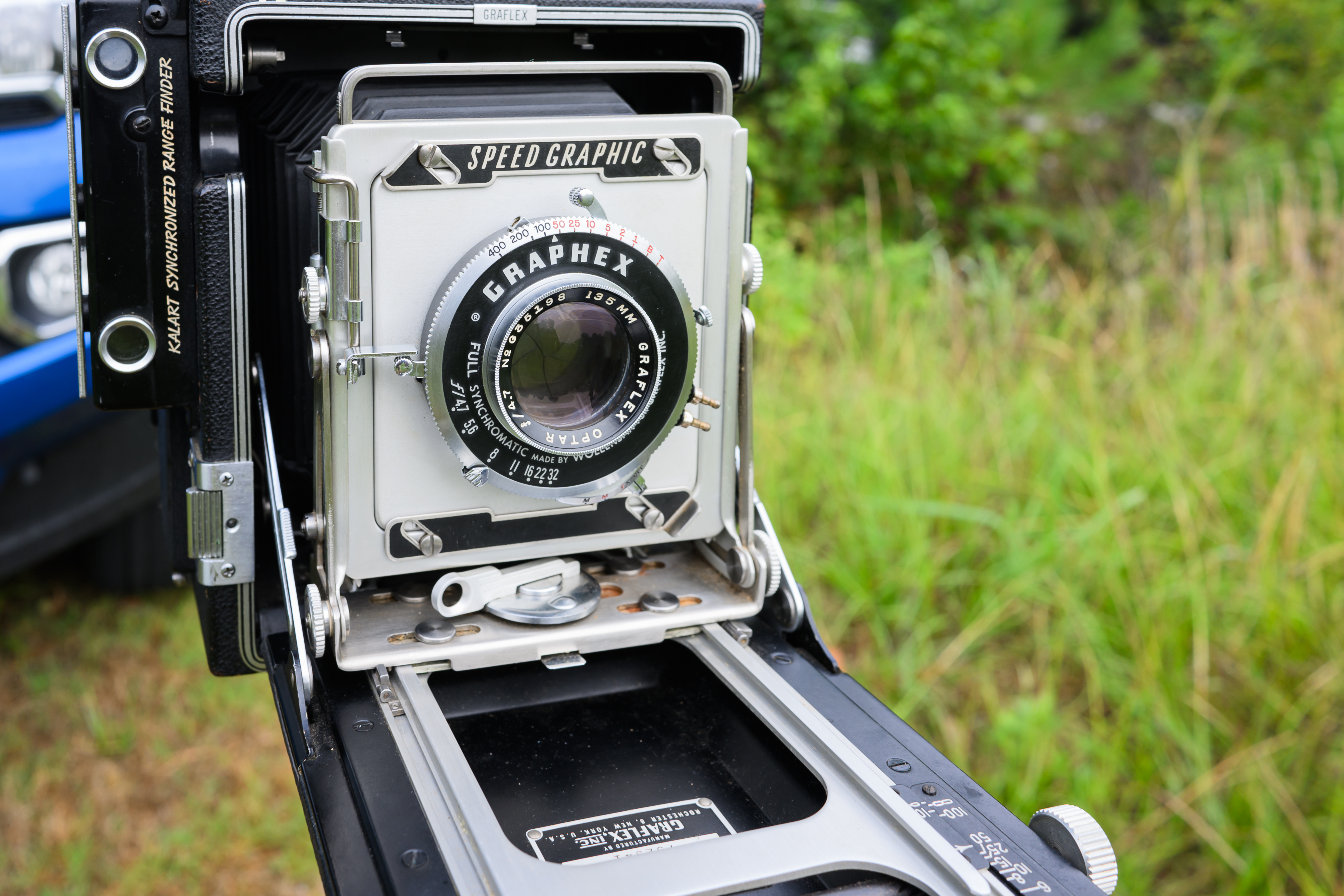
My photography got started in film. I started shooting in the 90’s with a Nikon N70, and then quickly moved to a Nikon N90s, but regardless of the camera, it was all film based back then. I can remember at the time, when digital first started making strides into photography, I couldn’t get a digital camera fast enough. But learning on film was one of the best things I ever did, and it has always stuck with me to this day.
My grandad also had the photography bug, and he shot with a Graflex Speed Graphic medium format camera that was popular back in his day. Many years ago now, this camera came into my possession and I did a post on it with some product photos to show off the camera (see My Graflex Speed Graphic Medium Format Camera). It was, and still is, in fantastic condition for its age, but I had never shot a single roll of film on the camera, until now.
Graflex Speed Graphic


I wasn’t actually even sure I could figure out how to shoot a roll of film on the camera. It did have all the necessary parts and film backs, so I figured I would give it a try. The lens had some kind of 50 year old muck on it so I did take the elements apart and clean them. Something I’m guessing was easier to do back then than it is today.
This photo below, to me, has always been the marquis image from that camera. A self portrait of my grandad reading the paper. He was between 18-20 years old at the time (I think). The composition, focus, diagonal lines, foreground, developing, everything about the image was so well done. It’s still to this day one of my favorite images.

So I got a roll of 120 Kodak Gold 200 and went out and shot what ended up being about 8 frames. Unfortunately, as things go with me and film, it sat in my refrigerator for over a year before I decided to get it developed. It took less than an hour to shoot it, but a year to see the results. I didn’t, and still don’t, have a good process for developing and scanning film. And then I get into this mindset of “why am I shooting expensive film when I am just going to scan it into digital anyway?” kind of thinking.
I LOVE the look of film, and I hate the cost of it, always have. But this one roll of film cost me almost $50, the exact receipt was $47.20 USD total for the 8 frames (yes, nearly $6 per frame).
- Film (from B&H) was $8.40
- Processing and scanning (local) – $38.80
At that price, it was worth saying I shot a roll with my grandad’s camera but not worth trying to do it consistently. I know there are cheaper options out there, and developing the film yourself is a huge savings. In comparison it doesn’t cost anything near that much to do the same process on my Canon AE-1, but I don’t shoot enough of this format to invest in all that right now.

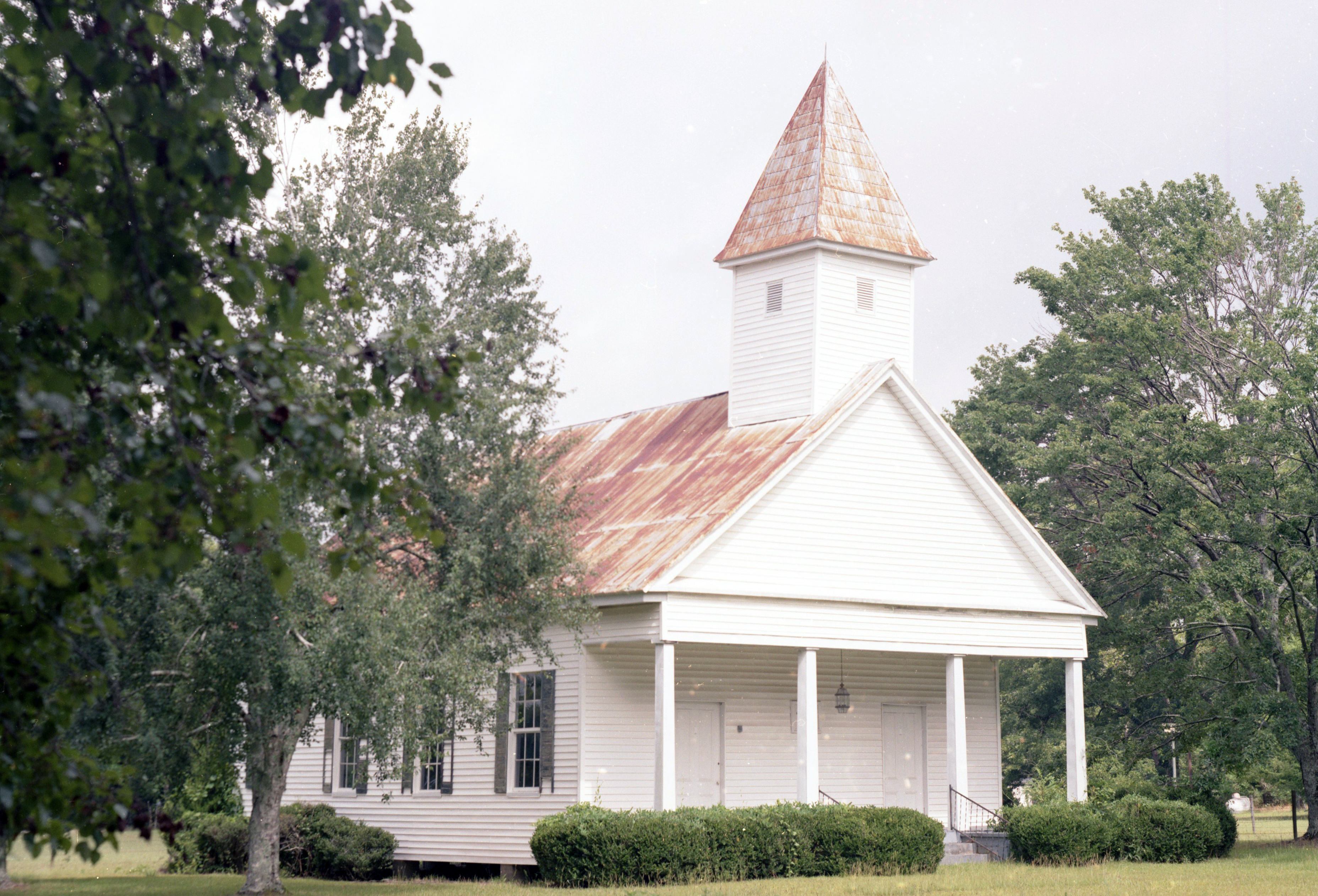
I would say the results are mixed. The last roll I shot on my Canon AE-1 were better in all respects, see Auburn’s A-Day Through Vintage Film, but this is a really old camera and my techniques were also less than great. The focus does seem to be a little soft. This could be the lens or my eye sight, and the framing seems to be something I would need to practice more since I didn’t leave enough space around some of the subjects. I do wish I had chosen a different subject than the rural rundown spots near my house, but I didn’t. The images of the church came out the best, though I really like the “Abandoned Porch” image for some reason.
The results below are unedited and how the scans arrived.
Kodak Gold 200 Results


Full vs Digital Comparison
This is a completely incorrect way to compare two things. The only similarities are the images were both shot with a camera and the subject is the same. But I thought it would be interesting to see the difference between a modern digital image and the 120 roll film on a 70 year old camera. It was interesting to see side by side. I shot the digital image on the same day as the film and posted the digital results at Marvyn Methodist Church Photos. Looking at that whole set again reminds me how amazing our digital results are these days.

I don’t know if I will ever shoot another roll of film with this camera or not, but I’m glad I did it at least once. I love the very simple way the shutter releases on the lens, the sound it makes as the timer ticks away it is fantastic, the weight, and the tactile manner use to operate the camera is just amazing.
I’m glad I took the time to use it even if it did take me a year to develop the roll of film. Now I just need to finish the half a roll of film still sitting in my Canon AE-1 that was there from a year ago.

3 responses to “Kodak Gold 200 on My Graflex Speed Graphic”
I quite like the light leak in that first image, and I really like the unedited images. I think they have a certain charm about them.
Funny enough, and very coincidental, my post tomorrow is about film!
Great article, enjoyed.
Yeah, I kinda like the light leak, it looks fake when you duplicate it in Lightroom but when you screw up how tight you rolled the film on and it leaks, not bad haha… I’ll look forward to your post tomorrow, film is such an interesting thing, especially the science behind the color emulsions and all that. I’m really thinking about getting the RNI film profiles because of how much time they’ve put into their film testing.
Oh, my! What a difference between the results of film and digital.