
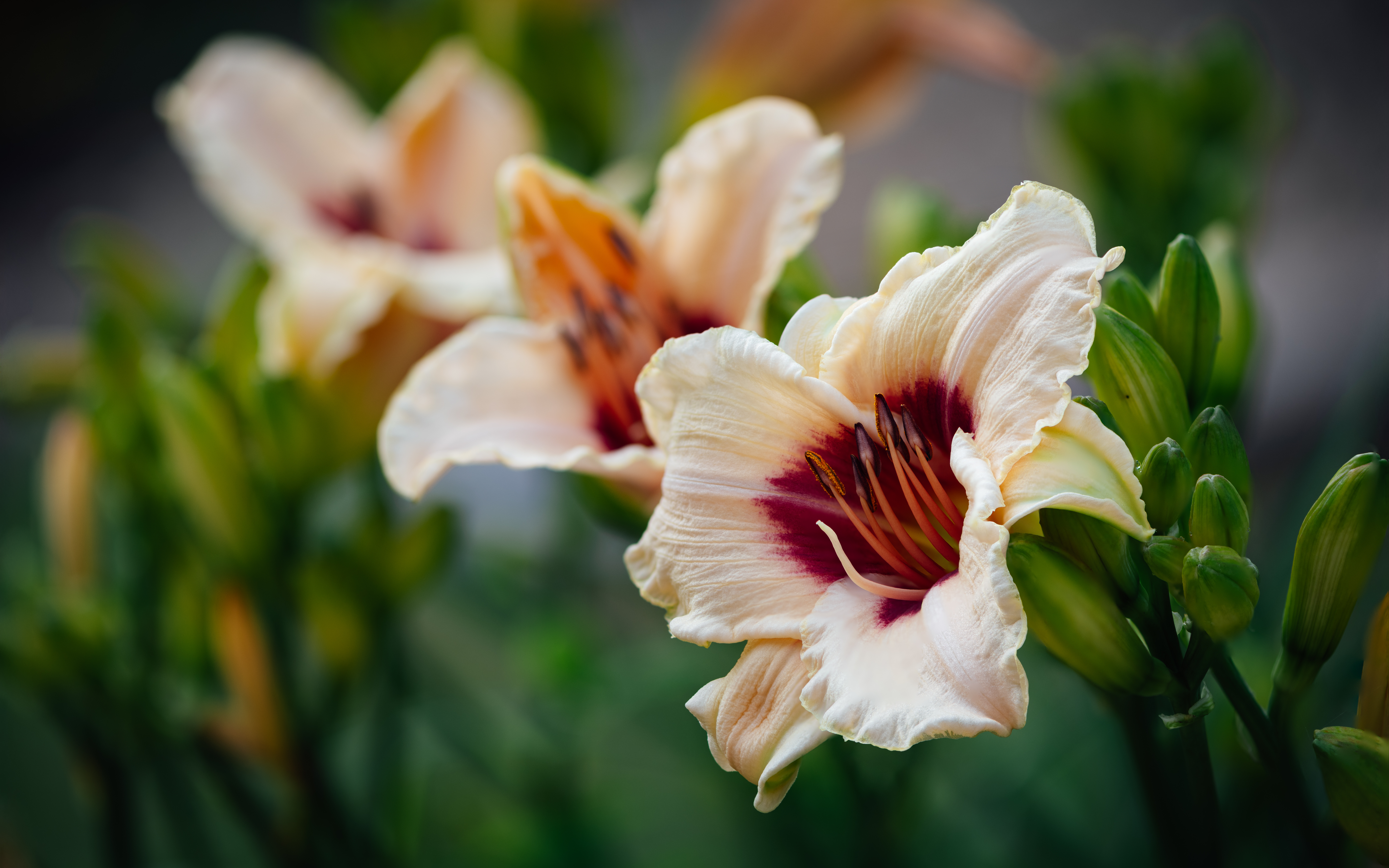
This has been the year of the Gladiolus in our gardens. We originally discovered these incredible bulbs many years ago, digging up a few random ones from an abandoned county road. Since then, they’ve multiplied steadily—though they never really bloomed much… until now. After relocating them several times, they’ve finally found a permanent home on the outside perimeter of our Iris Garden, and what magnificent blooms they’ve produced.


Gladiolus aren’t the most popular garden plant, and I suspect it’s because they don’t stand up well on their own. You have to stake them, box them in, or find some way to support their tall stems. Even then, they often collapse under their own weight. Despite these quirks, their vertical flower spikes are striking and elegant, making them an excellent subject for macro flower photography.
Exploring Photography Genres

Macro photography has always been one of my favorite photography genres. I’ve captured countless iris, lily, rose, or wildflower blooms over the years, but this is the first time the Gladiolus has made it into my collection. Over the past week or two, I’ve spent some morning hours photographing these blooms—only to find they’re just as temperamental in front of the lens as they are in the garden.
Their unique shape and layered structure make them both beautiful and challenging to shoot. Every angle offers something different, yet capturing it just right requires patience, timing, the right light, and NO wind. For the ones in this post I used a stack of about 30 images for each individual final image because of the depth of field they present.
One thing I’ve always found so interesting is how people often box themselves into a specific genre. You’re a wedding photographer, a portrait shooter, a product specialist—or in my case today, “the flower guy.” YouTube creators constantly preach the importance of staying in your lane, both for branding and growth. Ultimately for the sake of the paying customer, it is more beneficial (or efficient), especially for commercial purposes, to specialize in one area of photography, videography, or whatever that skill set might be with you.
But for me, that’s never quite worked as well as I would hope. Yes, specializing in one type of photography can lead to a great mastery of that subject matter. But most of us have broader creative interests. People, thank goodness, aren’t as one sided as the internet makes them out to be in real life.
How about this for a mix of genres and personalities… I admire the macro flower photography of Micke Vmix, for example, and have tried to capture a bit of his dreamy, damp, dank, moody, forestry shots. But I’m not in a misty European woodland—I’m photographing under the bright, hot, Alabama sun.
I love the human nature collections of James Popsys and the practical nature of Roman Fox and his street photography. Similarly, I love the street photography of Evan Ranft in Atlanta or Australia’s Jack Wang and his street bokeh insanity. Wang’s videos make me want to fly to Japan and shoot all night in the rain. Ranft’s tutorials are amazing, and incredibly helpful as learning tools, but even with all his guidance, it’s nearly impossible to replicate his perspective or editing style.
And that’s kinda the point. Photography isn’t about copying someone else. Your greatest asset as a photographer is you—your vision, your edits, your creative choices. Only you can do you.
What Kind of Photographer are You?

This week I’m a macro flower photographer. Last week I was documenting a Riverwalk trail bike trip. Years ago, I was an aviation photographer, I even got to capture Air Force One in Las Vegas and recently got to shoot the Blue Angels in Montgomery. After shooting for more than 30 years, I’ve come to realize I can’t confine myself to just one genre. I love them all, learn from the all, even if that means you excel at none.
The downside? Well, my skills are broad but not deeply specialized. My photography skills don’t ever get the time to totally master one genre. The upside? I get to explore photography in a constantly evolving creative process that keeps me inspired by ever changing subjects. Every shot demands your skills get better. It’s a never ending classroom of experience and knowledge, in an art form that is as broad as the east is from the west.


So, what about you? What’s your favorite genre of photography? Do you prefer to stick to one form, or do you enjoy experimenting across multiple styles?

4 responses to “Flower Photography and Why I Don’t Stick to One Genre”
Dear Scott
Thanks for showing us your beautiful pictures.
We don’t have any gladioli in our garden, because it’s too windy by the sea. We have a lot of irises instead.
The Fab Four of Cley
🙂 🙂 🙂 🙂
Thanks! Actually Iris bulbs are our thing, our Gladiolus are planted outside our Iris garden! We have a site we are building right now just for the Iris, check it out sometime if you’re interested https://dig.garden
Thanks for stopping by!
I tend to fully agree with you about being boxed in as a photographer. When I’m doing photography for myself, I can be shooting macro one minute, birds in flight the next or architecture another time.
I just love taking photographs, even when I’m doing it for “work” with people, I still enjoy every single second of it.
And as for flowers… There is always something special about photographing flowers. Every time, they are unique and they just keep giving pleasure.
Keep up the great work.
Thanks for your comment Mark, I’ve been enjoying going through your posts!